Rivers without Boundaries

A Fukushima in the Himalayas: How Ignored Warnings Drowned Nepal’s Hydropower Dream

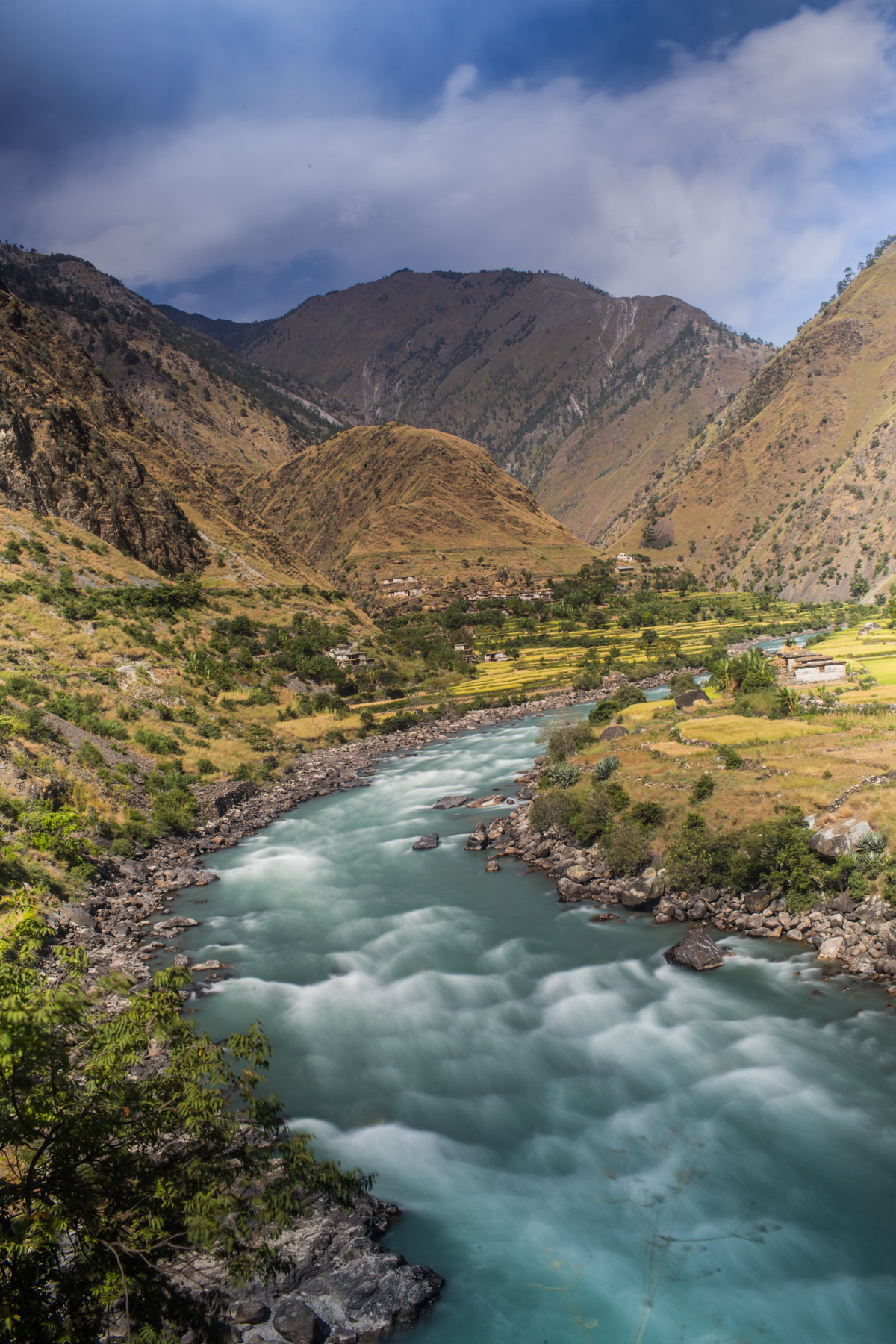
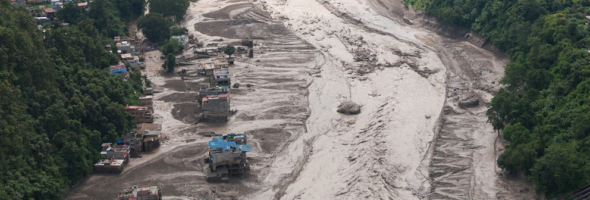
In late August 2026, the mountains of central Nepal roared, and a geological time bomb finally detonated. Following the collapse of a glacier near the Tibetan border, a catastrophic wall of water, mud, and debris tore through the Bote Koshi and Trishuli river valleys. For the communities and workers caught …

Rivers without Boundaries at the 48th World Heritage Committee Session: Defending Civil Society and Lake Baikal

Rivers without Boundaries (RwB) participated in the 48th Session of the World Heritage Committee, held in Busan, Republic of Korea, from July 19 to July 29. Unfortunately, the working environment for civil society participation within the Committee process has continued to deteriorate. Similar to last year, during the first day’s …

Switzerland’s role in Tajikistan’s controversial mega-dam

Tajikistan’s authoritarian government is building the world’s highest dam with World Bank financing. Critics say there may have been irregularities in the project. Tajikistan belongs to the World Bank voting constituency led by Switzerland. When completed, the Rogun Dam in Tajikistan is set to stand 335 metres high. It would …

Hydropower Under Pressure: The Rapid Rise of Next-Gen Energy Storage

Over the past decade, energy officials and climate activists have grown accustomed to celebrating the rapid decrease in solar and wind power generation costs. However, in 2025, it was energy storage, not renewable generation, that provided a cause for celebration. Hydropower now faces pressure from the development of other storage …

Rivers without Boundaries Call for Biodiversity Safeguards in Renewable Energy Shift

The rapid expansion of renewable energy in Central Asia is creating new risks for the region’s vulnerable ecosystems. To prevent conflict between climate targets and environmental protection, a coalition of public environmental organizations (including Rivers without Boundaries) has submitted a package of recommendations to energy and environmental ministries across Central …

New dams, old damage: hydropower quietly expands as biodiversity pays the price

The International Renewable Energy Agency (IRENA) has released the first of its two annual statistical reports on renewable energy capacity additions for 2025. As is customary, a revised edition will follow in approximately four months, incorporating government-submitted data that typically undergoes more rigorous verification and tends to yield more conservative …